September 2026

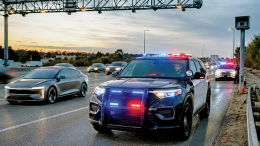
 Traffic Safety and Enforcement 2026: New Tools, Tech and Tactics

Stephenie Slahor, Ph.D. New technology, smarter strategies and practical solutions are reshaping traffic enforcement and roadway safety. Although traffic fatalities have declined from their pandemic-era peak, tens of thousands of people continue to die on America’s streets, roads and highways each year. The National Highway Traffic Safety Administration estimates that 36,640 people died in motor vehicle traffic crashes in 2025, a 6.7 percent decrease from 2024. The US Department of Transportation continues to seek comprehensive and effective approaches to reducing…
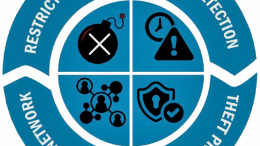
CISA Program Targets Access to Bomb-Making Materials

The Cybersecurity and Infrastructure Security Agency (CISA) offers the Bomb-Making Materials Awareness Program (BMAP) to help prevent terrorists and criminals from obtaining materials which can be used to construct homemade explosives and improvised explosive devices. Sponsored by CISA’s Office for Bombing Prevention, BMAP focuses on restricting access to explosive precursor chemicals, powders, target materials, and associated components. The program concentrates largely on the planning phase of a potential attack, particularly the acquisition of materials and bomb-building stages. BMAP also works…


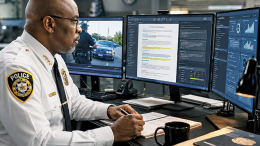
 AI in Police Report Writing: What Law Enforcement Leaders Need to Know

John G. Peters, Jr., Ph.D., and John Black, D.B.A. ©2026. A.R.R. Artificial Intelligence (AI) is reshaping public safety work and nowhere is that shift more visible than in AI-assisted Body-Worn Camera (BWC) report writing. The term “artificial intelligence” was introduced by John McCarthy and colleagues in a 1955 proposal for the 1956 Dartmouth Summer Research Project on Artificial Intelligence. AI still has no universally accepted definition; Ian McCulloh, Ph.D., of Johns Hopkins University, offers a working one: “a machine that…


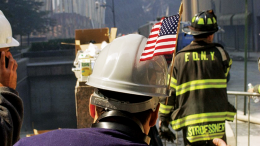
 25 Years after 9/11: Remembering Those Who Answered the Call

On September 11, 2001, an ordinary Tuesday morning changed America forever. Today, the images remain difficult to comprehend: smoke pouring from the World Trade Center; the Pentagon burning; a scarred field near Shanksville, Pennsylvania; firefighters climbing stairways as civilians descended; and police officers directing people away from danger while others moved toward it. The terrorist attacks claimed 2,977 lives at the World Trade Center, the Pentagon and aboard Flight 93. For America’s public safety community, September 11 also demonstrated what…