2026

The NCJA Center for Forensic DNA Policy & Practice Website Is Now Live!

The National Criminal Justice Association is excited to announce the launch of the new NCJA Center for Forensic DNA Policy and Practice Website – a national resource designed to support policymakers, state administering agencies, forensic laboratories, law enforcement leaders, the media, and criminal justice practitioners. As the use of forensic DNA continues to advance, policymakers and criminal justice leaders need accurate, accessible information to support policy development and implementation. The NCJA Center for Forensic DNA Policy and Practice serves as…

Public Venue Security Resources Guide Now Available

The Cybersecurity and Infrastructure Security Agency (CISA) has released its Public Venue Security Resources Guide, a 2026 publication designed to help venue managers strengthen security and resilience against evolving physical and cyber threats. The guide addresses facilities which routinely attract large crowds, including stadiums, arenas, convention centers, theaters, fairgrounds, festivals, museums, zoos, libraries, and other public gathering locations. The guide brings together federal resources covering risk management; suspicious behavior; emergency planning; active assailant preparedness; vehicle ramming threats; cybersecurity; unmanned aircraft…


When the Chief’s Voice Is a Deepfake

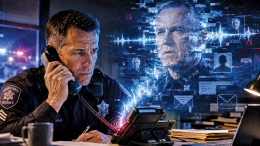
Carl Mazzanti Picture a patrol officer working a late shift when the phone rings. Caller ID appears to show the chief’s direct number. The voice on the other end sounds right; the cadence, inflection and manner of speaking are unmistakable. Then comes an urgent order. Leave the scene. Provide credentials to an internal system. Transfer funds for a confidential operation. Send sensitive information to another officer immediately. Perhaps even disregard an instruction received minutes earlier. The officer has every reason…


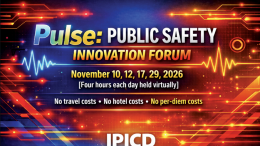
IPICD Takes 2026 Public Safety Conference Online with PULSE Innovation Forum

The Institute for the Prevention of In-Custody Deaths (IPICD) will replace its 2026 in-person conference with PULSE: Public Safety Innovation Forum, a virtual event scheduled for November 10, 12, 17, and 19, 2026. Conducted via Zoom from 9:00 a.m. to 1:00 p.m. Pacific Time, the forum will consist of four separate four hour sessions addressing current issues affecting law enforcement training, operations and supervision. The virtual format allows agencies to participate without the travel, hotel and per diem expenses normally…


And Nothing But the Truth

Ramesh Nyberg  What It Takes to Make a Case Stick Have you ever gotten pissed off at the prosecutor? My guess is that, if you have been in law enforcement for more than three years – and especially if you’ve worked in an investigative capacity – you’ve had your share of frustration with them. They are, after all, the people whose job is to vigorously pursue a conviction of the people we worked hard to put in handcuffs. Our work…


Surveillance after Chatrie: The Rules Are Changing

James E. “Jeb” Brown, Esq., Shield Public Safety Training, Inc. What the Supreme Court’s geofence ruling could mean for ALPRs, pole cameras, drones, and the growing ability to reconstruct a person’s movements On June 29, 2026, the Supreme Court decided Chatrie v. United States, holding that a geofence warrant used to obtain a person’s cell phone location history from Google is a search under the Fourth Amendment. The opinion does not specifically address Automatic License Plate Readers (ALPRs), pole cameras…


Where Have All the Cruisers Gone? 

Sergeant James Post “Where have all the cruisers gone; long time passing?Gone to junkyards, everyone. Oh, when will they ever learn?” My appreciation to the late Pete Seeger, as his 1960s war lament seemed perfect to “customize” for this article because we currently have a police car shortage in the land of the free. Sure, there are “new” cruisers which can be seen, sat in and driven at the LE expos, but the most are rebadged earlier models or humongous…


DOJ Releases National Standards for Law Enforcement De-escalation Training

The U.S. Department of Justice’s Office of Community Oriented Policing Services (COPS Office), working with the National Policing Institute, has released National Standards for Law Enforcement De-escalation Training, establishing requirements for training programs seeking certification under the Law Enforcement De-escalation Training Act of 2022 (LEDTA). The document establishes 14 national standards – seven addressing training development and delivery and seven covering training content. Requirements include interactive and scenario-based instruction, use of scientific research and real-world examples, participation by crisis response…


Beyond the Alert: Gunshot Detection in Modern Investigations

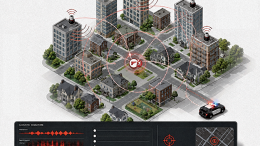
Melissa Krum Dooher For more than two decades, acoustic gunshot detection has helped law enforcement respond faster to gunfire, but its value increasingly extends beyond the initial alert and into the investigation itself. Properly utilized, acoustic gunshot detection can provide investigators and prosecutors with essential forensic evidence of when a shooting occurred; where it occurred; and, in some cases, how it unfolded. As gunshot detection technology becomes more common in criminal investigations, courts and practitioners must understand the legal principles…


BUSTED!

JAMES L. MCCLINTON, PH.D. Robotaxis are evolving into RoboCops… A self-driving Waymo taxi reported two teens to the police in San Mateo, California, after they were found drinking alcohol and shooting toy guns in the back of the vehicle. The San Mateo Police Department detained two 15-year-olds after the Waymo they were riding in contacted the department and stopped in a parking lot until law enforcement arrived. Officers removed both teens from the vehicle and determined they were using toy…