
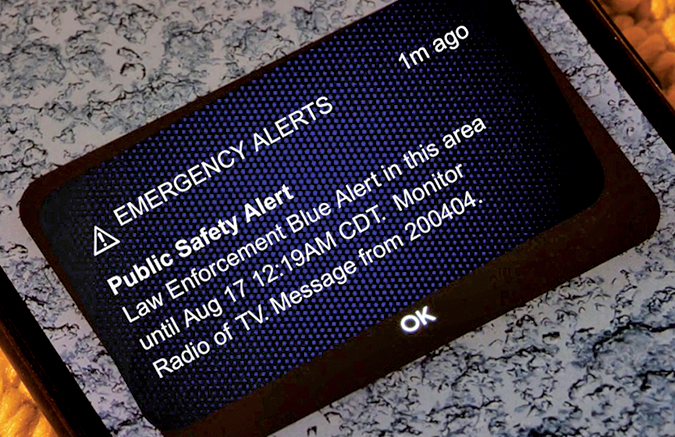
The National Blue Alert Network supports the use and integration of Blue Alert plans throughout the United States in order to rapidly disseminate information to law enforcement agencies, the media and the public to aid in the apprehension of violent criminals who have killed or seriously injured an officer in the line of duty. Blue Alerts can also be issued when a suspect poses an imminent and credible threat to law enforcement, or when an officer is missing in the line of duty.
Blue Alerts can be transmitted to television and radio stations; to cellphones and wireless devices; to overhead highway message signs; and other secondary alerting mechanisms – in the same way that AMBER Alerts are commonly issued. There are currently 37 states with Blue Alert plans. The COPS Office provides resources and technical assistance to states, territories, law enforcement agencies, and tribes seeking to establish or enhance Blue Alert plans, including voluntary activation guidelines, examples of legislation, policies, and forms gathered from around the nation in a central Blue Alert data repository.
The COPS Office has announced a new video resource introducing the National Blue Alert Network. The video explains how Blue Alerts work: Authorized agencies submit requests when specific criteria are met and critical information is quickly distributed through FEMA’s Integrated Public Alert & Warning System (IPAWS) across mobile devices, television, radio, and highway message signs.
The resource highlights the importance of speed, coordination and public awareness in helping law enforcement locate suspects and protect communities. It also outlines how states can participate in the Blue Alert Network at no cost, with support from the COPS Office to develop and implement effective alert plans.
For more information about Blue Alerts, including fact sheets, guides and additional resources, visit the National Blue Alert Network webpage at cops.usdoj.gov/bluealert