
By Mike Boyle
Off duty carry offers critical protection, but safe, effective use depends on judgment, training and knowing when to intervene.
A unique aspect of American law enforcement is that officers may carry a firearm while off duty. This practice has long been supported by police unions, administrators and officers themselves. Unions back it because officers may be called upon to take enforcement action even when off the clock. Administrators have also favored the idea, recognizing the value of armed trained professionals in the community. For individual officers, however, the primary reason is personal protection, since encountering dangerous individuals from past interactions remains a very real possibility.
A rite of passage when one begins a law enforcement career is getting that first off duty gun. You quickly come to terms with the fact that you not only have the power of life and death while on duty, but on your own time as well. Make no mistake about it, this is a huge responsibility and, in fact, requires a few lifestyle changes. It could include the clothing you wear, places you go and the consumption of alcoholic beverages. But, with some minor adjustments, you can still go about your routine as long as you pay attention to some details.
The World Is a Dangerous Place!
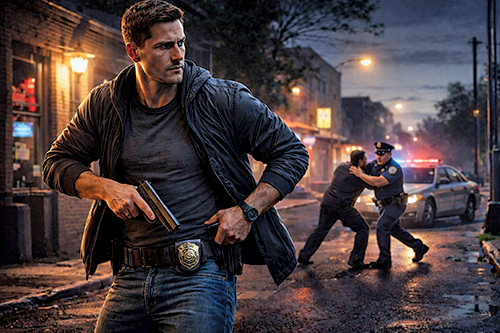
Although today’s officers are better trained and equipped than ever before, violent crime and attacks on police have spiked and there is still an element of risk when off duty. When it’s least expected, an officer could get caught up in a violent confrontation while defending themselves or others. Consider for a moment the following recent incidents:
Van Nuys, CA – A Beverly Hills officer driving down a road encounters two men fighting, one armed with a pipe and the other with a gun. He attempts to control the situation, but is threatened by the man with the gun. The subject is killed and the man with the pipe flees the scene, but is located later.
Chicago, IL – An off duty officer intervenes in a fight between a man and a woman. The man, armed with a knife, stabs the women and the officer fires two shots, striking the subject. The subject leaves the scene, but is found a short time later dead in a vehicle. Unfortunately, the woman also dies as a result of her injury.
Jacksonville, FL – A 24 year veteran of the Sheriff’s Office was fatally shot after trying to intervene in a violent argument between a man and woman at a Northside truck stop. Authorities said the officer was off duty when he arrived just after 1:15 a.m. and heard the dispute near a Ford Mustang®. After he stepped in, the man told him it was a “family matter,” then struggled with the woman and pointed a gun at the officer. Police said the suspect fired as the couple drove away. The veteran officer later died at a hospital.
Prince Georges County, MD – A police officer attempts to come to the aid of a neighbor in the midst of a heated domestic incident. The subject produces a gun and fires at the officer. This intervention saved the woman’s life, but both the subject and officer are killed.
Without question, we can uncover numerous incidents when an officer took action which saved someone’s life. Unfortunately, many of these stories do not end well. Even more disturbing are off duty incidents when an officer crossed the line and used deadly force when it was not justified, with some examples originating from road rage or incidents in bars. In some cases, this has resulted in a movement to disarm off duty police. These sorts of incidents often paint the involved agency in a bad light and result in termination, criminal prosecution and incarceration for the involved officer. Don’t be that guy!
Training and Policy
Does your department have a policy relative to officer actions while off duty? Policies need to be crystal clear as to what sort of events in which an officer should or should not get involved. I’m not suggesting that we turn a blind eye, but there are certain instances when intervention could be dangerous to the officer or bystanders.
In those situations, it might be best to act as a trained observer, take in as much information as possible and summon the uniformed troops. However, in situations when a subject has used, or is about to use, violence, the game changes 180 degrees. But, before jumping in with both feet, ask yourself, “Is my intervention likely to result in a good outcome?”
As distasteful as it might seem, observing some sort of illegal behavior when off duty and letting it go for the moment can be a bitter pill to swallow. This might include certain types of property crimes, motor vehicle violations, disorderly persons, or other less serious offenses. Violence directed at you or others is a whole different ball game. But, before getting involved, consider the following.
Do you have the proper safety equipment? As we all know, confronting people for even the most minor offenses can set them off and spiral out of control. You might have your handgun, but what about handcuffs, a less-lethal weapon, body armor, and a way to summon backup?
Agency policy should also include a statement on what sort of firearms may be carried, holsters, ammunition, and standards for qualification. I’m often bewildered by departments who allow officers to merely drop a smaller handgun in their duty holster, run through the mandatory qualification course and call that training. Clearly, there is much more to the picture than that and realistic training will incorporate drawing the concealed handgun from the holster and the clothing worn by the officer on their own time.
Another element often neglected in training is how to interact with responding officers should you be involved in any sort of shootout. You might think you are emitting some type of good guy aura, but, more than likely, responding officers don’t know you from the man in the moon. All they see is a possible threat holding a gun. I am familiar with one incident when an off duty officer produced a firearm in an attempt to control a group of gangbangers inside a fast food restaurant. When uniformed officers responded, the off duty officer (who was not known to them) made a move they interpreted as threatening and he was shot and killed. Training should include how to react to responding officers so they do not appear to be a threat. In short, do exactly what they say!
And the Best Off Duty Gun Is…
When I entered law enforcement, the revolver was the near universal duty weapon and off duty, snub revolvers dominated. In the 1980s, agencies began shifting to semiautomatic pistols, prompting officers to rethink what they carried off duty. Although small pocket pistols had been around for some time, I never considered them especially reliable and the rounds they fired were not particularly impressive. As a result, my backup/off duty gun remained a snub revolver until retirement.
But, technology marches on and today’s officers have far better choices from which to select. In my estimation, the best choice for off duty is a compact, subcompact or micro version of the pistol you carry on the job. No doubt, you have invested quite a bit of time training with your duty pistol. Having a system with the same grip angle and placement of vital controls flattens out the learning curve. Industry leaders such as GLOCK®, SIG SAUER®, S&W®, and Springfield Armory® all make downsized versions of their duty pistols and these would be an ideal choice for carry in soft clothes.
Carry the biggest gun you can effectively conceal when dressed in the type of clothing you normally wear. Ideally, your off duty gun should be chambered for a service cartridge as it affords the greatest potential for stopping a determined adversary.
Carry Modes
I prefer to carry my concealed handgun on the strong side hip. This is the same familiar location where I carried my duty gun for years and it simplifies the process of getting into action quickly. Other than clearing your clothing away, the draw stroke is very similar to drawing from a duty holster. Reality often gets in the way and, depending on the weather, type of clothing, or even the social setting, I may have to make an adjustment. Truth be told, I probably have three or four different holsters for everyday carry pistols.
Strong side belt holsters can be worn either inside or outside the waistband and can be had in different styles and made from different materials. Much of this comes down to personal preference and qualities such as comfort, ride height, angle, weapon security, and the ability to effectively hide the gun come into play. Inside the waistband rigs remain the most discreet, but I remain very particular in what sort of holster I can wear in relative comfort. Appendix inside the waistband holsters have become very popular as they boast very fast weapon access and concealment qualities. I will confess to having some misgivings about placing a short trigger-action pistol down the front of my pants, but ultimately that’s your decision.
There are of course other styles such as shoulder, pocket, crossdraw, and ankle holsters, but these remain a distant second choice to a good belt holster. They may be a good choice when dressed in some types of clothing, but ready access can be problematic in extreme close quarters.
A complication we often face is how to carry a pistol in hot, humid weather or when dressed in athletic clothing. While bags aren’t nearly as efficient as a belt holster, you will have your gun on your person and, with practice, you can get into action fairly quickly. When going on my boat or for a bike ride around the neighborhood, I have grown fond of the Vertx® Everyday Fanny Pack. This small bag doesn’t shout gun and I have affixed a KYDEX® holster to the VELCRO® loop panel for stability. Another possibility from the Vertx line is the Long Walks Multipurpose Waistpack which features a front storage compartment and quick access pull tab. My Long Walks bag can accommodate a larger handgun which is secured by Tactigami™ to the back panel and has proven to be a great companion.
Other Gear
If you carry a handgun, you need to carry spare ammunition. Although the need to reload is very remote, you certainly don’t want to be caught short. Magazine pouches for both the pocket and belt are available from a wide variety of sources. Just be advised that a magazine pouch printing through your shirt will give you away just as easily as that pistol in your holster. You may want to check out the Magna-Clip Magazine Carrier by N8 Tactical. This innovative carrier is available from Crossbreed Holsters and enables you to securely carry a spare magazine tucked inside the waistband.
When dressed in uniform, most officers have at least one lethal force option, but that all changes when off duty. A small impact weapon or OC unit is a possibility, but I doubt if most officers would bother. I make it a point to carry a small tactical flashlight which can be used for illumination purposes or personal defense like a yawara. Likewise, I doubt if many officers would burden themselves carrying handcuffs.
By all means, carry your police identification and have it someplace where you can get to it quickly. In addition to my ID folder, I clip my retired badge just forward of my holstered pistol to avoid any misunderstandings and minimize the possibility of being mistaken for a bad guy.
Final Thoughts
Today, departments generally take a neutral stance or encourage off duty carry (I fall into the latter camp). In some situations, especially minor offenses, not taking action may be the best choice, particularly if friends or family are with you and could be affected by your intervention. Still, most officers would find it hard not to act when confronted with certain crimes, especially violence against others. At the top of the list, however, is personal defense, whether against random street crime or an unsavory person from your past seeking payback.
Avoiding risky places, people and late-night situations can reduce the chances of a violent encounter, but sometimes bad luck puts you in one anyway. In those moments, being armed, using sound tactics and thinking clearly may give you the means to prevail. A firearm remains that final ring of safety.
Captain Mike Boyle served with New Jersey Fish & Wildlife, Bureau of Law Enforcement, and has been active in use-of-force instruction for over 40 years. He is an instructor in multiple firearms and less-lethal disciplines and has been a police academy assistant director, instructor and rangemaster. He is the author of three books; three training videos; and hundreds of magazine articles on firearms, training and tactics. Mike served 21 years on the Board of Directors of IALEFI and is a member of NLEFIA and ILEETA. He continues to work part-time as a law enforcement training specialist and resides in Forked River, NJ.